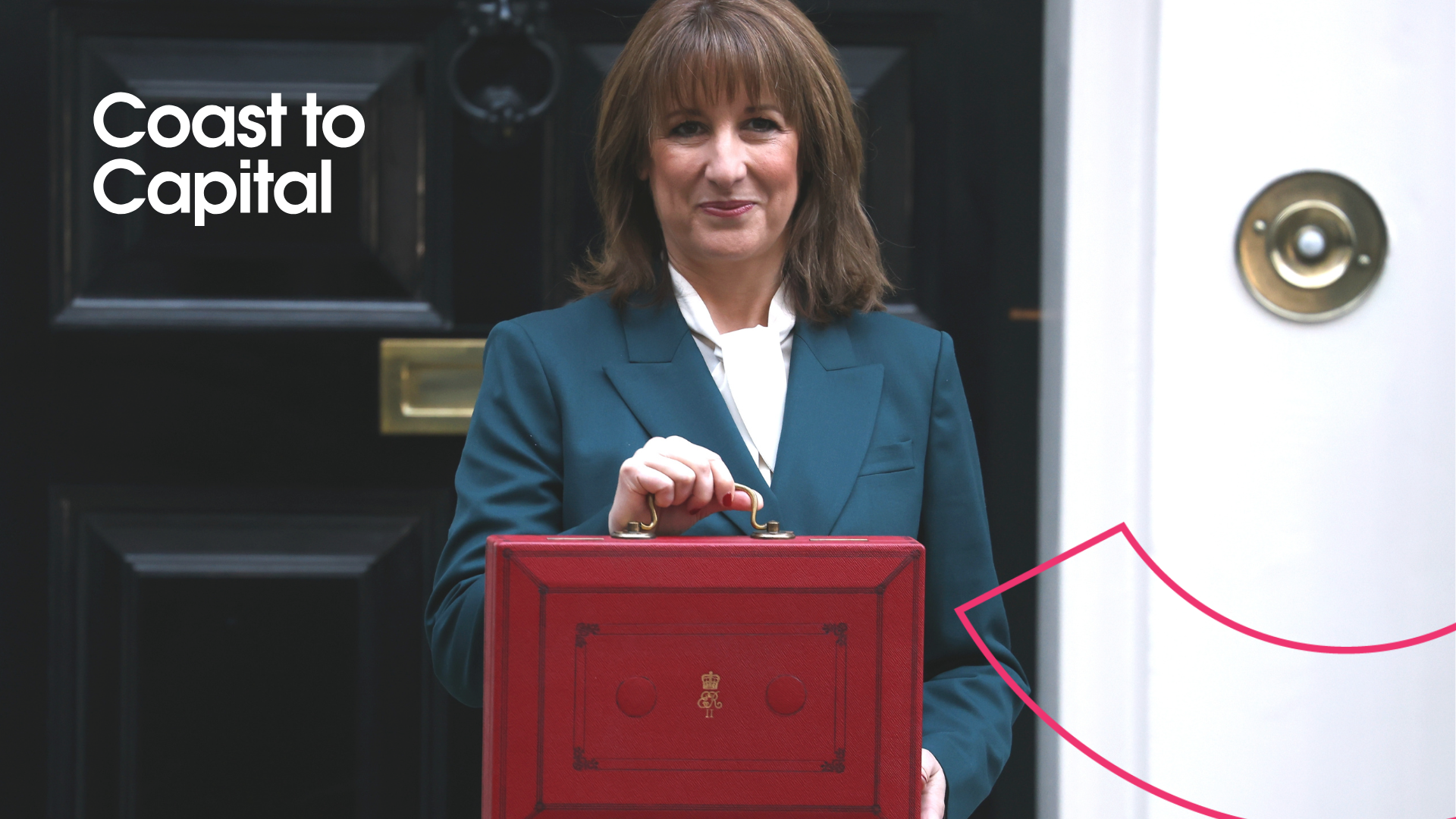
On 26 November 2025, the Chancellor of the Exchequer unveiled the government’s Budget after months of speculation and an unexpected leak of documents minutes before she made the statement. This Budget represents one of the most significant tax hikes in recent years, reflecting the government’s attempt to raise new revenue to build a greater buffer against shocks, meet their fiscal rules on day-to-day spending, and fund new welfare commitments.
At Coast to Capital, our focus is on what the Budget means for the South East economy and business community. While the Chancellor reiterates the government’s attempt to attract more investment and create a more competitive business environment in the UK, the gap between words and deeds is increasingly stark, with business confidence reflecting this discrepancy. The government needs to follow an authentic pro-growth route which would address some clear issues that business in the UK face, including high tax burdens, high employment costs and other difficulties like exorbitant energy bills.
Opportunities
Despite the difficult fiscal backdrop, the Budget does signal some positive developments for business and regional growth. Capital spending was not cut, as it has been in the past to fund holes in the public finances. That is good news for infrastructure spending which is critical to businesses being able to access markets and skills. New reforms to financing for scaling companies in science and technology sectors are also positive.
Importantly for some regions, the Budget allocates £13 billion for seven mayors in England, underscoring the shift towards devolved, place-based development. While the South East is yet to possess the same level of devolution, the direction of travel is encouraging for when changes are implemented in Surrey and Sussex over the next couple of years. Alongside this, the Chancellor announced reductions in business rates for high street retail, hospitality and leisure properties. While these longer terms changes to business rates are on the whole positive, some businesses who were benefitting from more generous pandemic-era discounts will suffer in the short term and may see their bills rise.
Risks
Tax rises are the biggest feature of this Budget. For businesses, the most direct impact could be the ever-increasing cost of employment. The government’s proposal to cap tax-free salary sacrifice pension contributions could increase employment costs for businesses and raise burdens on employees.
Although the Budget emphasises investment, the South East is not prioritised. This means the region will need to compete with others for the same pots of funding. As we have highlighted in previous articles, the South East economy represents excellent return on investment for capital spending yet is taken for granted due to its high productivity in comparison to other regions of the country. However, in a globalised economy it is at risk of falling behind comparable areas in Europe and has infrastructure of a deteriorating quality much like other parts of the UK. Without investment these challenges will persist.
The government’s words and ambition on growth are yet to match their actions and delivery. With a greater fiscal buffer provided in this Budget, the hope must be that reduced speculation leading up to future fiscal events provides space for more long-term thinking about how to support businesses and entrepreneurs start and scale their enterprises, hiring new workers in the process.
Next steps
At Coast to Capital we will be closely monitoring the next steps in the government’s policies towards growth and what it would mean for the South East England. As a place-based economic organisation we have a strong track record of delivering regeneration, business support, strategy planning and project delivery. We are ready to work with local authorities, businesses and partners to shape plans for growth in this uncertain environment.
Our commitment is to ensure the South East has a strong voice, clear strategy, and the capacity to seize opportunities and manage risks in the months ahead.