2025 has been a pivotal year for the South East, marked by significant shifts in policy and infrastructure that could shape the region’s economic future. Plans such as the Gatwick Airport expansion, Surrey and Sussex devolution, and local government reorganisation efforts present considerable opportunities for business and investment. Despite these promising developments, the region’s economic performance has remained steady, with areas of potential growth that warrant attention and focus.
Key numbers
Economic growth in 2025 has been stable. According to the Confederation of British Industry (CBI), the UK’s GDP growth rate is projected at 1.4%, up from an earlier forecast of 1.2% in June 2025. The South East has outperformed the national average in several key economic indicators, including lower economic inactivity rates, higher productivity, higher average household income, and higher GDP per capita.
But it’s important to note that business growth has continued to be a challenge for the South East economy in 2025. This includes discrepancies within the region, as well as between lower business activity and higher general economic indexes. While Mid Sussex, Surrey and West Sussex have more high-growth businesses than the national average, Brighton and Hove and the London Borough of Croydon have lower high-growth businesses than national average.
Business births across most of the Coast to Capital area are slightly lower than the national average, with the exception of Croydon. This suggests that while the South East benefits from a robust economy, local business growth isn’t keeping pace with the broader economic indicators. Over the long term, it will be crucial for the region to create a more supportive environment for businesses to thrive.
Key events
Gatwick Airport expansion
The Gatwick Airport expansion stands out as one of the most exciting developments of 2025, stimulating new opportunities for inward investment and business ventures across the region. The £2.2bn expansion plan is set to increase flight capacity from 280,000 to 390,000 by the late 2030s, bolstering the region’s status as a global gateway, opening up new opportunities for inward investment, business growth, and strengthened international connectivity.
Surrey’s finalised reorganisation plan
In October, Surrey County Council announced the government’s final decision of Surrey’s reorganisation plan, dividing the county’s existing two-tier system into West Surrey and East Surrey. In May 2026, elections will take place for the proposed new unitary councils, and the new councils will be formally established in April 2027. Although Surrey councils were previously expected to have a strategic mayoral authority like most of other devolved areas, the decision has not yet been finalised. The new councils will have devolved powers, which will make it easier for businesses to engage with local authorities, and the authorities will be better able to initiate targeted support and place-based investment.
What to expect in 2026
Economic outlook
The UK economy is expected to experience a GDP growth rate of around 1.3%, with the South East likely to see moderate growth in line with or slightly above the national average. The main nationwide challenge facing the business community is rising business costs, particularly labour costs. Economic productivity is also expected to remain slow.
Devolution and reorganisation in Sussex and Brighton
As part of the broader devolution agenda, Sussex and Brighton is set to receive a final decision on its devolution and reorganisation plans. A new mayoral authority, originally scheduled for election in May 2026, has been delayed until May 2028. The new unitary councils will be established in 2028, with the mayoral authority playing a pivotal role in coordinating infrastructure investment and driving business growth. These changes will significantly impact the business community in Sussex and Brighton, providing new opportunities for collaboration and investment.
Following-up measures of the 2025 Autumn Budget
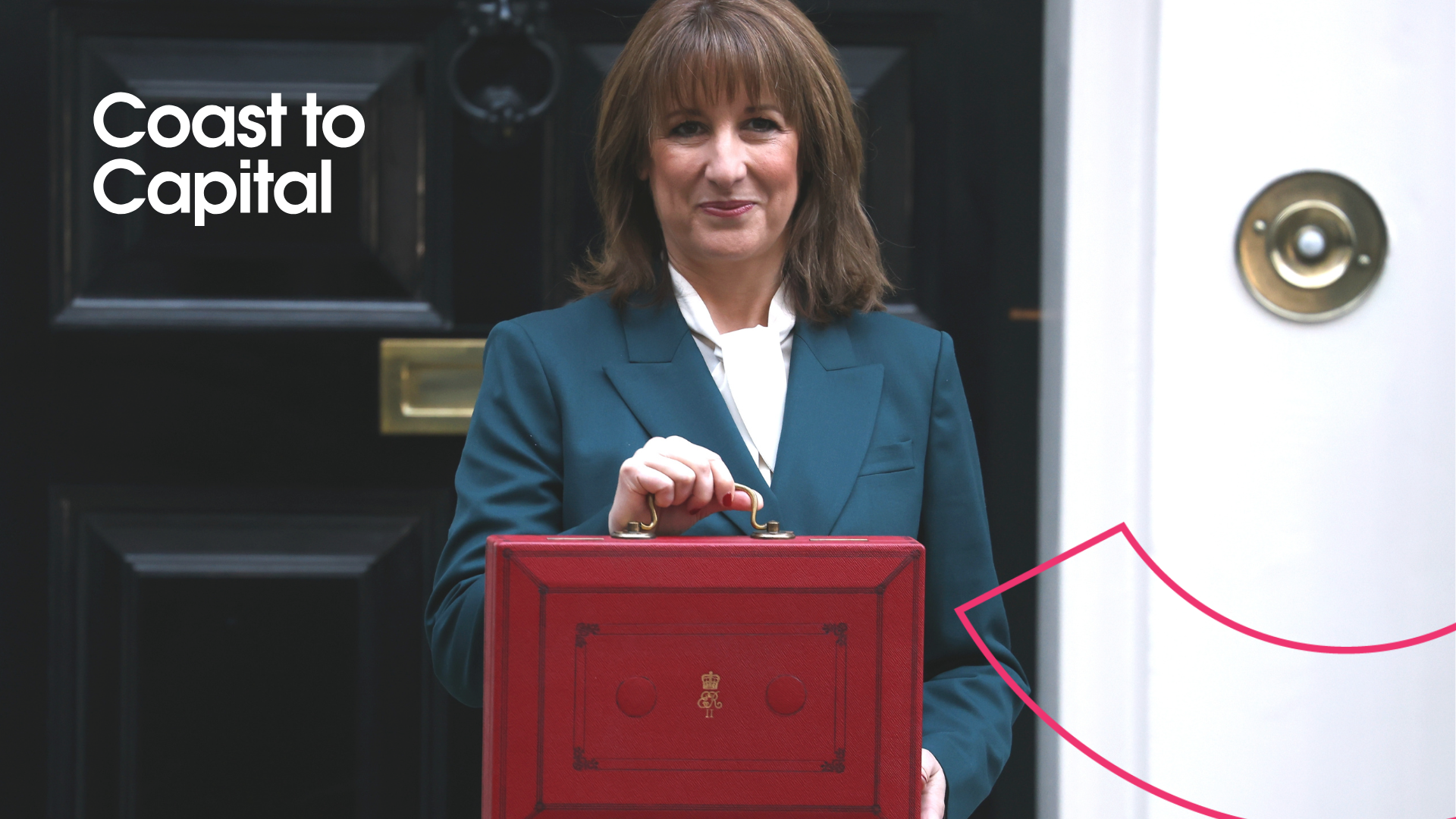
In the Autumn Budget, the Chancellor emphasised the government’s determination to attract business and investment in the UK, with a particular focus on a place-based economy. More measures to encourage business and investment are expected to follow.
A Coast to Capital view
The South East remains one of the UK’s most dynamic and prosperous regions, supported by world-class infrastructure and robust investment returns. Despite national policy changes and international uncertainties, the region demonstrated resilience in 2025.
As we look to 2026, the interaction between government initiatives and the private sector will be even more critical. At Coast to Capital, we will continue to monitor government policies and their implications for the business community.
Local authorities will play an important role in fostering business growth, particularly by enhancing support for small and medium-sized enterprises (SMEs). By leveraging the region’s strengths in life sciences, technology, and education, local and regional authorities can create an environment that encourages innovation, collaboration, and investment, helping businesses scale and remain competitive in the South East’s evolving economy.